
Rajani MD PlasmaGLO Hair+ Cap: Read the Return Policy Before the $799 Launch Deal
The new hair cap pairs a 16-week routine with a launch discount. Its return terms, skin-type indication and device-specific evidence deserve attention first.
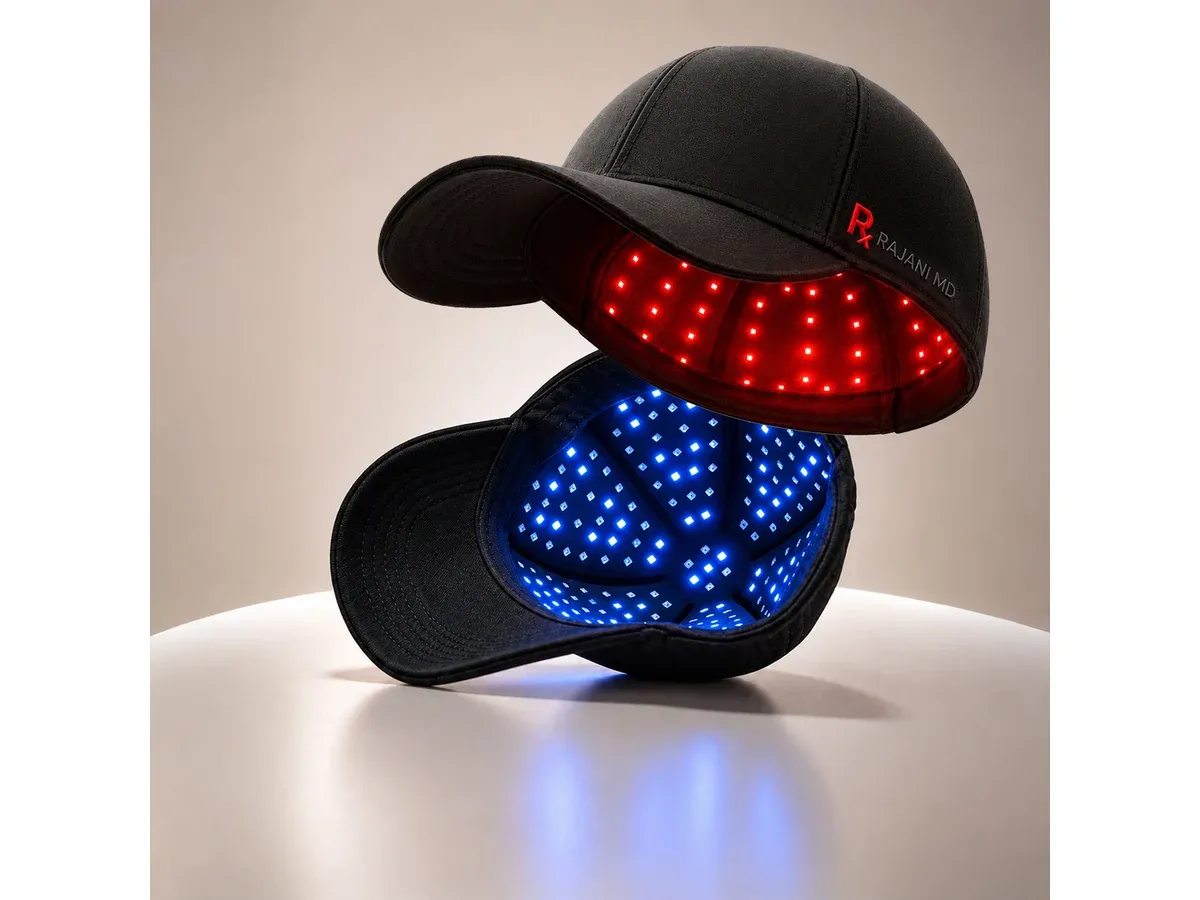
Product photo courtesy of Rajani MD via PR Newswire; black PlasmaGLO Hair+ Cap, model ZLD-500C, shown in red and blue modes · License
The Rajani MD PlasmaGLO Hair+ Cap comes with a 16-week routine and a US$799 launch price, against a US$999 list price. Its retailer’s general return window is 30 days for eligible devices. There is another catch to read first: the same policy says discounted and promotional items are final sale.
We would clarify this launch offer’s return eligibility in writing before buying. A discount on a hair-growth device should not be confused with a chance to try it for the full recommended course and then decide whether it worked. Blushie has not tested the cap or its hair-growth claims.
The advertised US$200 saving needs a second look
Rajani MD announced the cap on October 22, 2026. On October 23, its US product page displayed US$799, a crossed-out US$999, an active add-to-cart option and an estimated dispatch time of one to two business days. That is a shipping estimate from the brand, not a delivery guarantee for every address.
The cap combines laser and LED technology in a rechargeable, cordless design. The current product listing specifies 300 laser diodes, 140 red LEDs and 60 blue LEDs, with separate red/laser and blue-light modes. The recommended schedule is 12 minutes every other day for 16 consecutive weeks.
The convenience is easy to understand: something you can wear at home while answering emails may feel more manageable than another appointment. Whether the routine is comfortable or effective for you is a different question from how many lights fit inside the hat.
Thirty days is not sixteen weeks
The retailer’s published returns policy, checked the same day, describes a 30-day window from delivery for eligible items. It says an opened, used device returned within that window is subject to a 10% return fee plus return shipping.
Its final-sale section separately excludes sale, promotional, discounted and clearance items from returns, subject to the exceptions described in the policy. The cap is advertised at a launch discount. We did not find a clear cap-specific exception explaining whether that offer qualifies for standard change-of-mind returns.
That leaves a practical question to settle before spending US$799: does this exact offer qualify for a return at all, and on what terms? Even if the ordinary 30-day window applies, it ends well before the recommended 16-week course. The two-year device warranty concerns manufacturing problems and replacement; it is not a promise of satisfactory hair growth.
Hair thinning can make a hopeful before-and-after photograph feel unusually persuasive. The financial terms deserve attention before that hope becomes a large purchase.
The indication and the evidence both have boundaries
The product page’s stated indication concerns androgenetic alopecia, with specified female-pattern classifications and Fitzpatrick skin types I–IV. Types V and VI are not listed. That is a limitation in the published indication, rather than proof of harm or proof that the device would fail outside that group. It deserves a clear discussion with a qualified clinician if it affects you.
The American Academy of Dermatology advises getting the cause of hair loss diagnosed, because other conditions can resemble female pattern hair loss and need different treatment. A cap marketed for pattern loss should not become the automatic answer to every kind of shedding.
There is research behind light therapy, but the retailer explicitly notes that its cited studies tested other devices, not PlasmaGLO Hair+ Cap. One 2025 study of a different LED cap randomized 160 people. The individual active groups did not meet statistical significance on the primary endpoint, while pooling them produced a significant difference from sham; 91 participants were excluded from the per-protocol analysis. That is evidence to read with its limitations, rather than a direct result for this new model.
Our take: the cordless format may appeal if the device’s indication fits your situation. Before paying for the launch offer, establish that fit and get its return terms clarified. We would want evidence for this particular system before treating its impressive light count as a reason to pay more.
Sources
- Rajani MD: October 22 PlasmaGLO Hair+ Cap launch announcement
- Rajani MD: current cap price, protocol, indications and research limitations
- Rajani MD: current device returns, discounted-item exclusions and warranty policy
- Thomas et al.: 2025 randomized trial of a different red/blue LED cap
- American Academy of Dermatology: diagnosis and treatment of female pattern hair loss