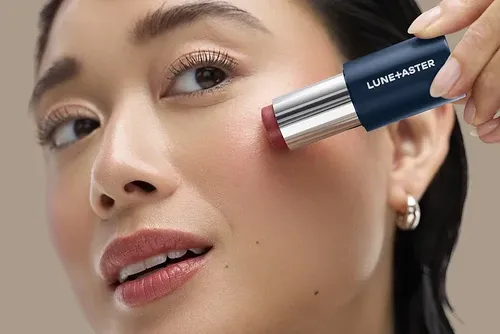
Product photo courtesy of Bluemercury / Lune+Aster via PR Newswire — Cream Multi-Stick; pictured shade not specified by the brand · License
A blush stick can have a perfectly respectable career making cheeks pink. Lune+Aster Cream Multi-Stick also arrives with a skincare ambition: Bluemercury’s product page says its peptides and gardenia stem cells help protect against collagen loss. That is a substantial extra job for a US$38 wash of colour.
For now, the published consumer test supports people’s impressions of the makeup’s feel and blending; it does not demonstrate collagen protection. We like the idea of one colour for cheeks, lips and lids. We would judge the purchase by that makeup brief until the separate skincare claim comes with evidence that addresses it.
One colour, three places to wear it
Bluemercury announced Lune+Aster’s refresh on October 13, 2026, introducing the multi-stick alongside new highlighting sticks, quads and other products. Global Cosmetics News covered the relaunch on October 16. This is a new assortment from an existing brand, rather than an entirely new beauty label.
The pitch is a simpler routine. A portable colour stick can make sense when your makeup time is the five minutes between finding your earrings and leaving the house. Fingers are an application option in the retailer’s directions, alongside a sponge or brush. There is no requirement to buy a coordinating brush to use it.
On October 19, the US listing showed US$38 and an active add-to-bag option for Brick. The range lists Brick, Melon, Apricot, Blush and Berry. We did not confirm every shade’s local-store availability. The advertised finish is dewy and the colour buildable; we have not wear-tested either claim.
Read the footnote under “Clinical Trials”
The retailer places its user-feedback results beneath a clinical-trials heading. The footnote describes a third-party consumer perception study of 69 people over one week. For example, 93% agreed that the product blended smoothly and evenly.
That is relevant information if you are choosing something to blend hurriedly over your cheeks. A perception study can tell you what participants thought about using a product. Having a third party run it does not turn a questionnaire into an instrumental measurement of collagen.
The same page separately attributes barrier-repair and collagen-protection benefits to peptides and gardenia stem cells. In the public listing we reviewed, there is no corresponding result measuring collagen protection, nor a published method connecting the one-week feedback to that claim. This does not establish that the claim is false. It means the evidence shown answers a different question.
For a related example of why the method matters, our Curél cream analysis separates a headline skincare claim from the test behind it. The distinction is just as useful when the skincare language is printed beside blush.
Choose the colour with your own face in mind
A shade you enjoy on your cheeks may read differently on your naturally pigmented lips or eyelids. The retailer provides swatches across different skin tones; use those as a starting point rather than assuming one model’s finish predicts your own. Its authorized press photograph shows the actual cream stick in use, but does not name the pictured shade. We have labelled that uncertainty rather than guessed from a photograph.
Our opinion: the multi-use format is the convincing part. Choose it if one of the five colours and a dewy finish genuinely suit the way you wear makeup. If your reason for spending US$38 is collagen protection, we would wait for evidence addressing that outcome. A blush can earn its place through beautiful colour without needing a second career in skin biology.